Climate, invention, and a living collection in three overlapping worlds.
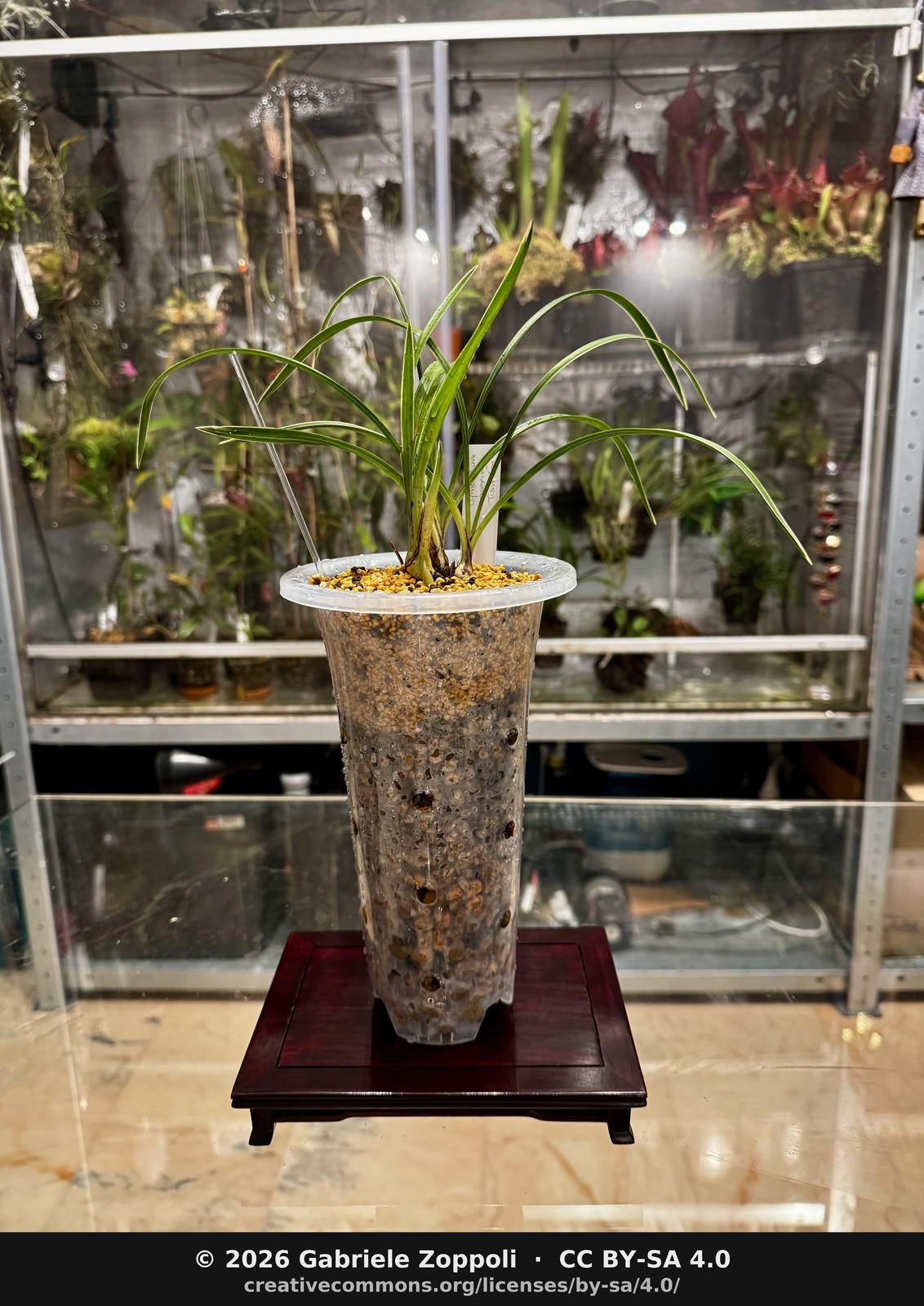
A highland cloud-forest terrarium cooled by a marine compressor and orchestrated by Node-RED, the standalone inventions built around it, and the wider plant collection — documented end to end.
- Accessions
- 404
- Alive today
- 300
- Genera
- 91
- Species photographed
- 122
- Terrarium volume
- 1,000 L
- Operational since
- 2023
Live conditions
- Temperature
- —
- Humidity
- —
- VPD
- —
- Water tank
- —
- Compressor
- —
- Fan
- —
- Lights
- —
- Mister
- —
- Power
- —
- Mists today
- —
- Room
- —
- Room RH
- —
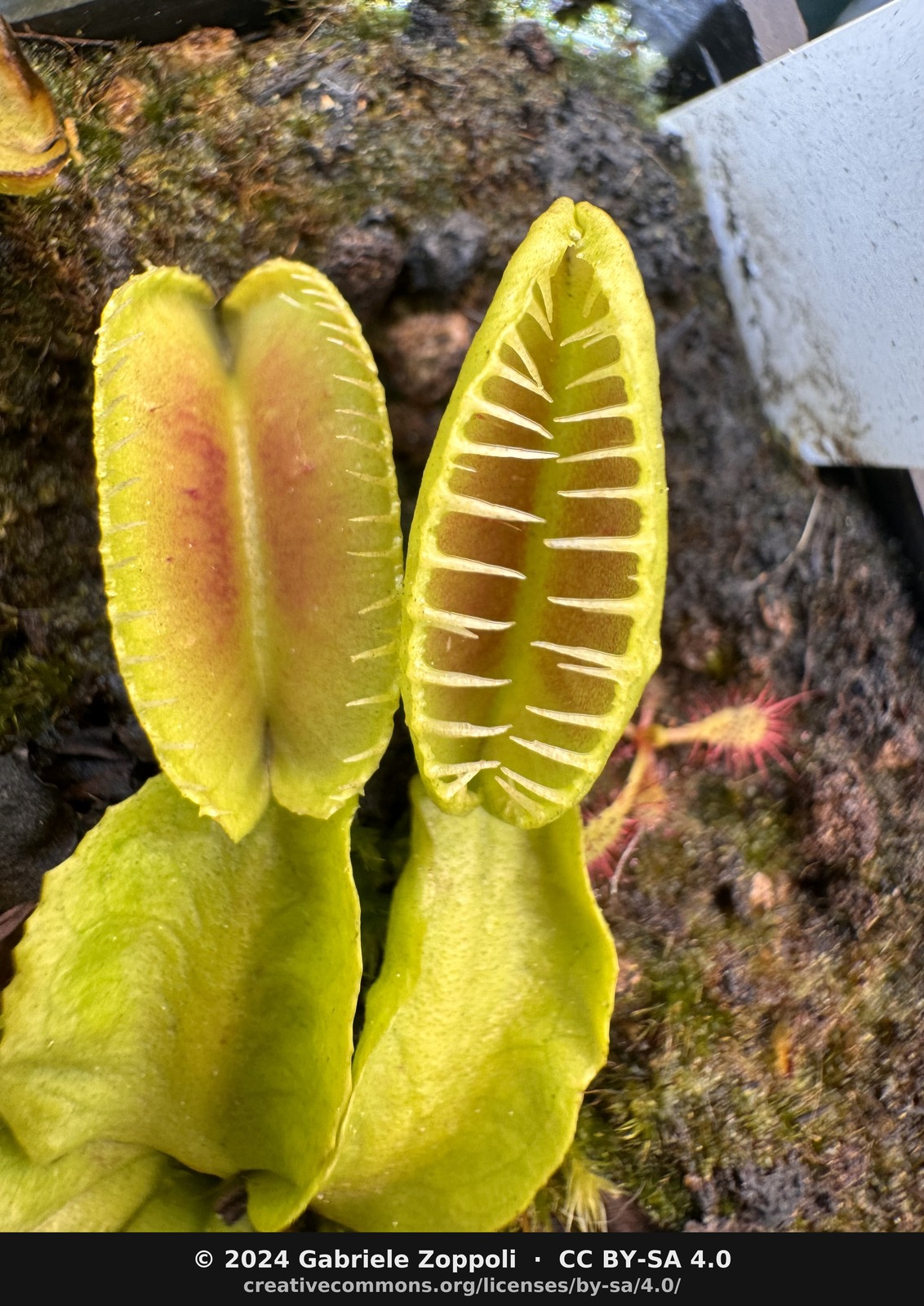
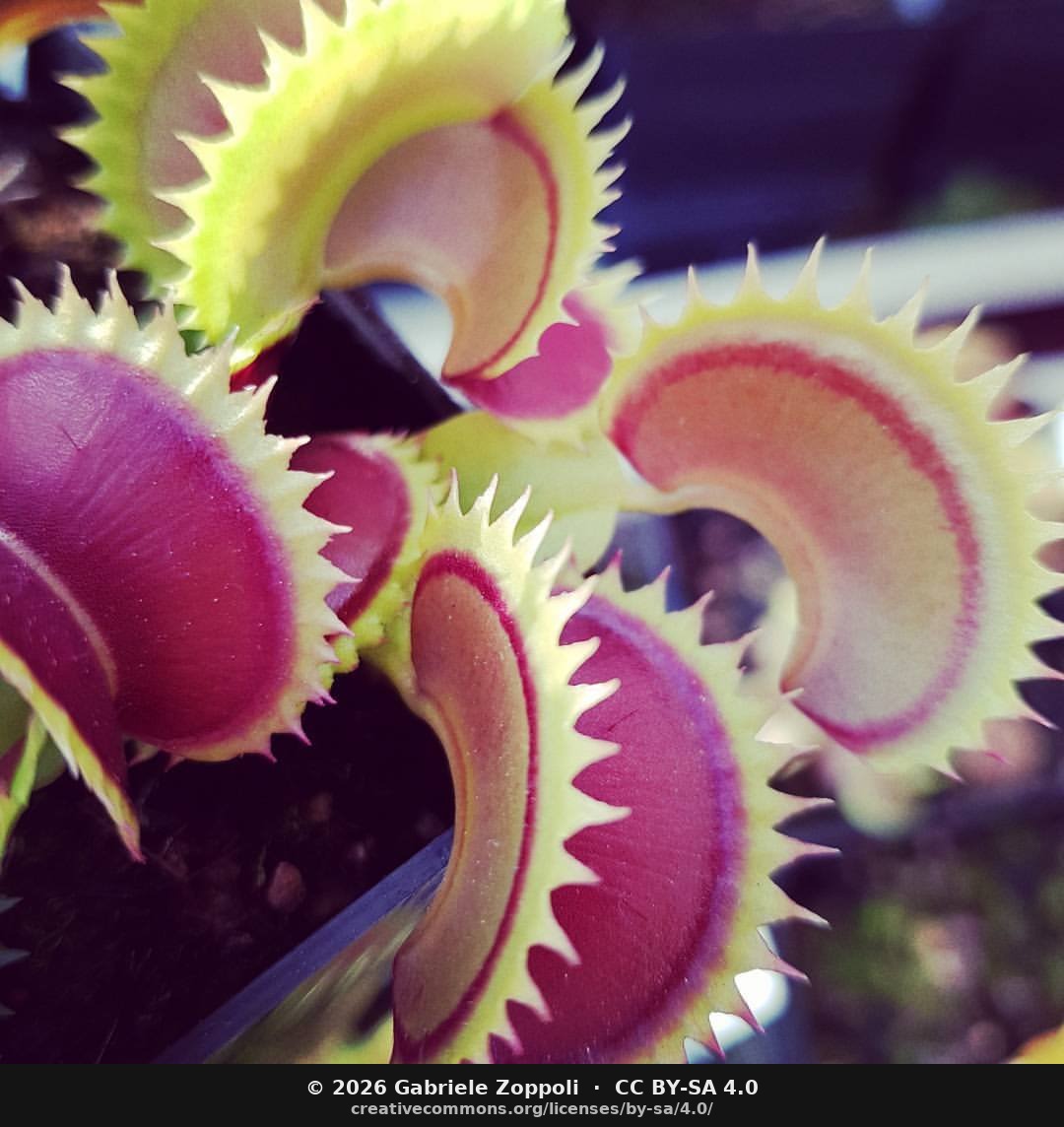
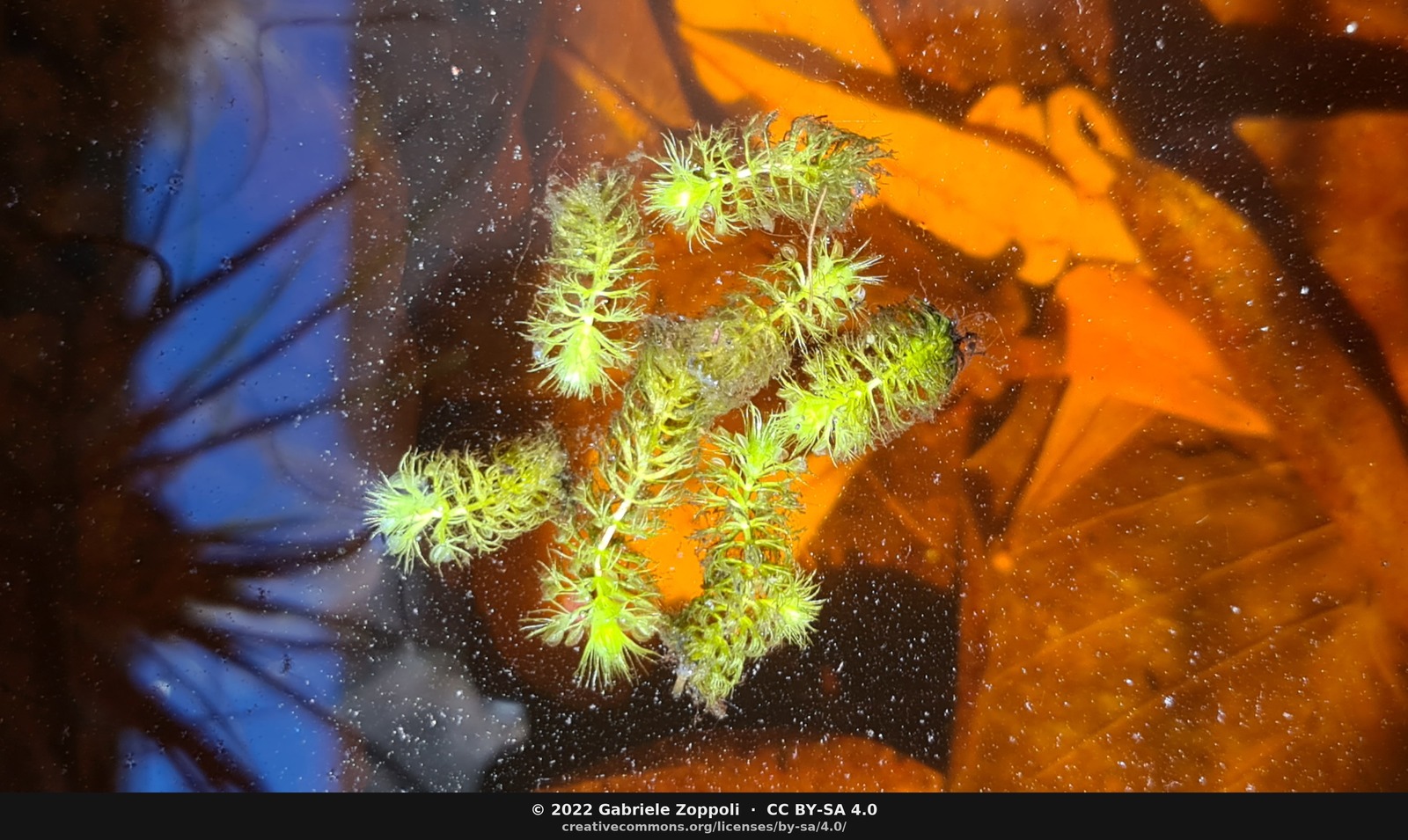
A living atlas of convergent highlands.
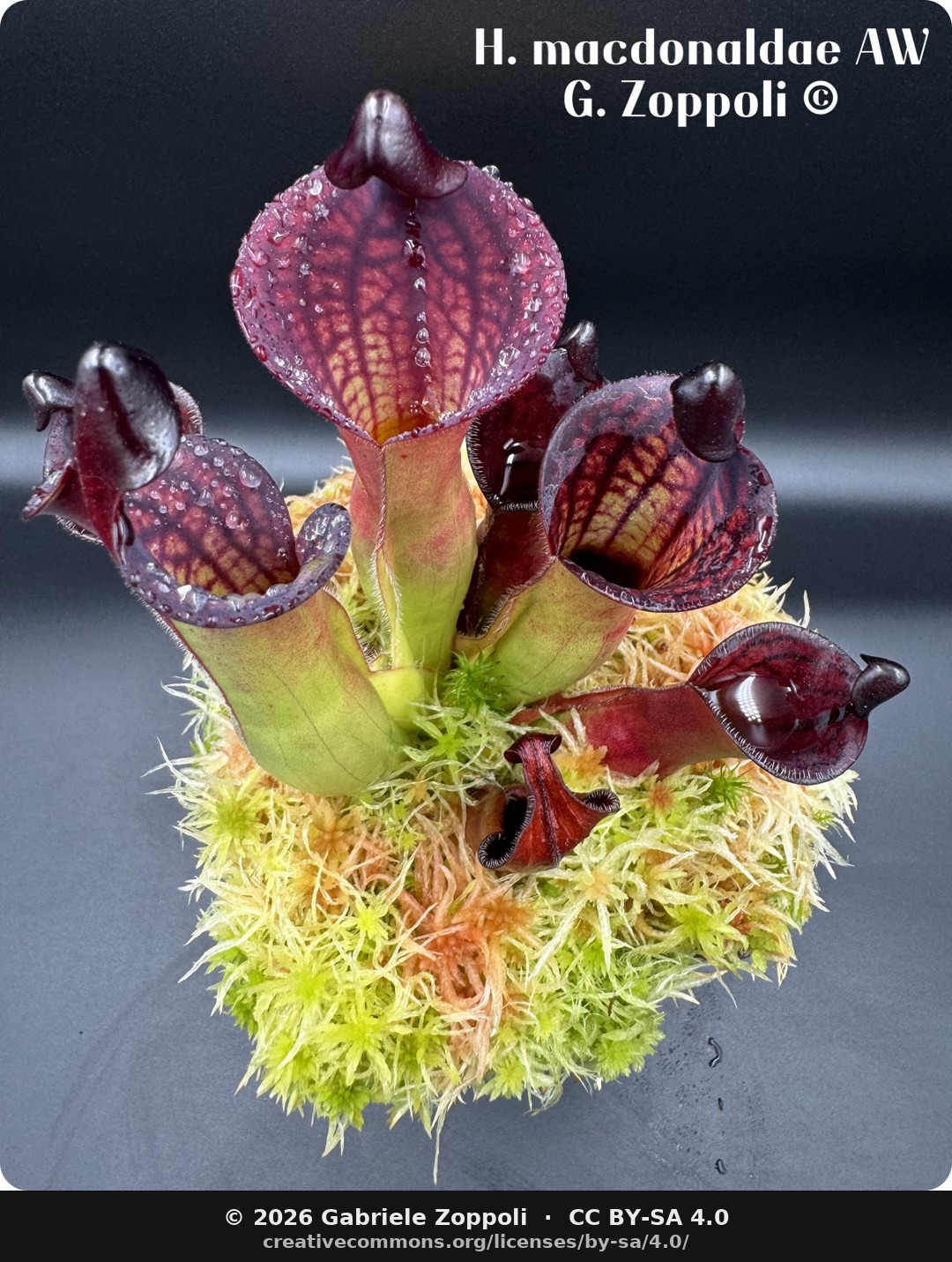
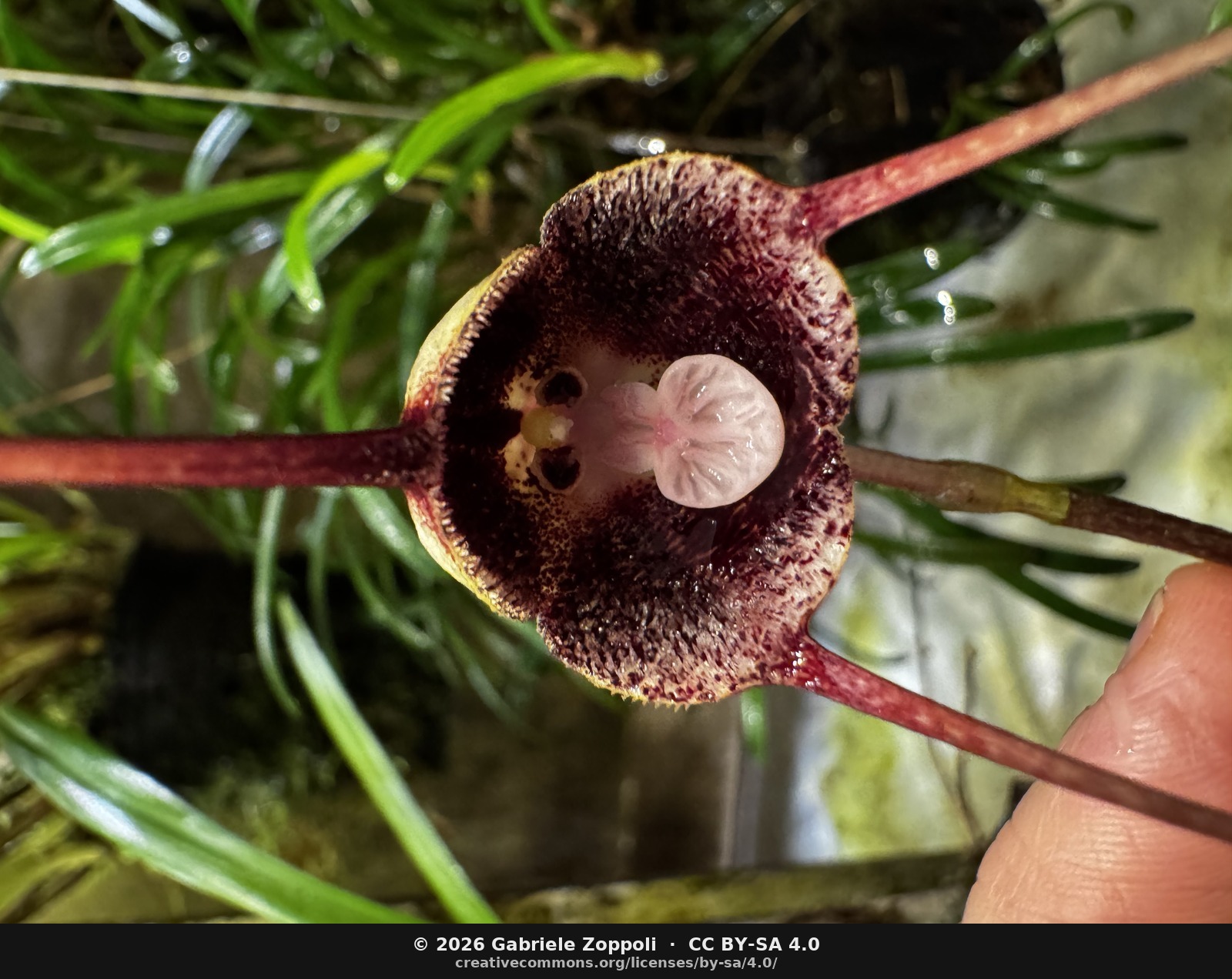
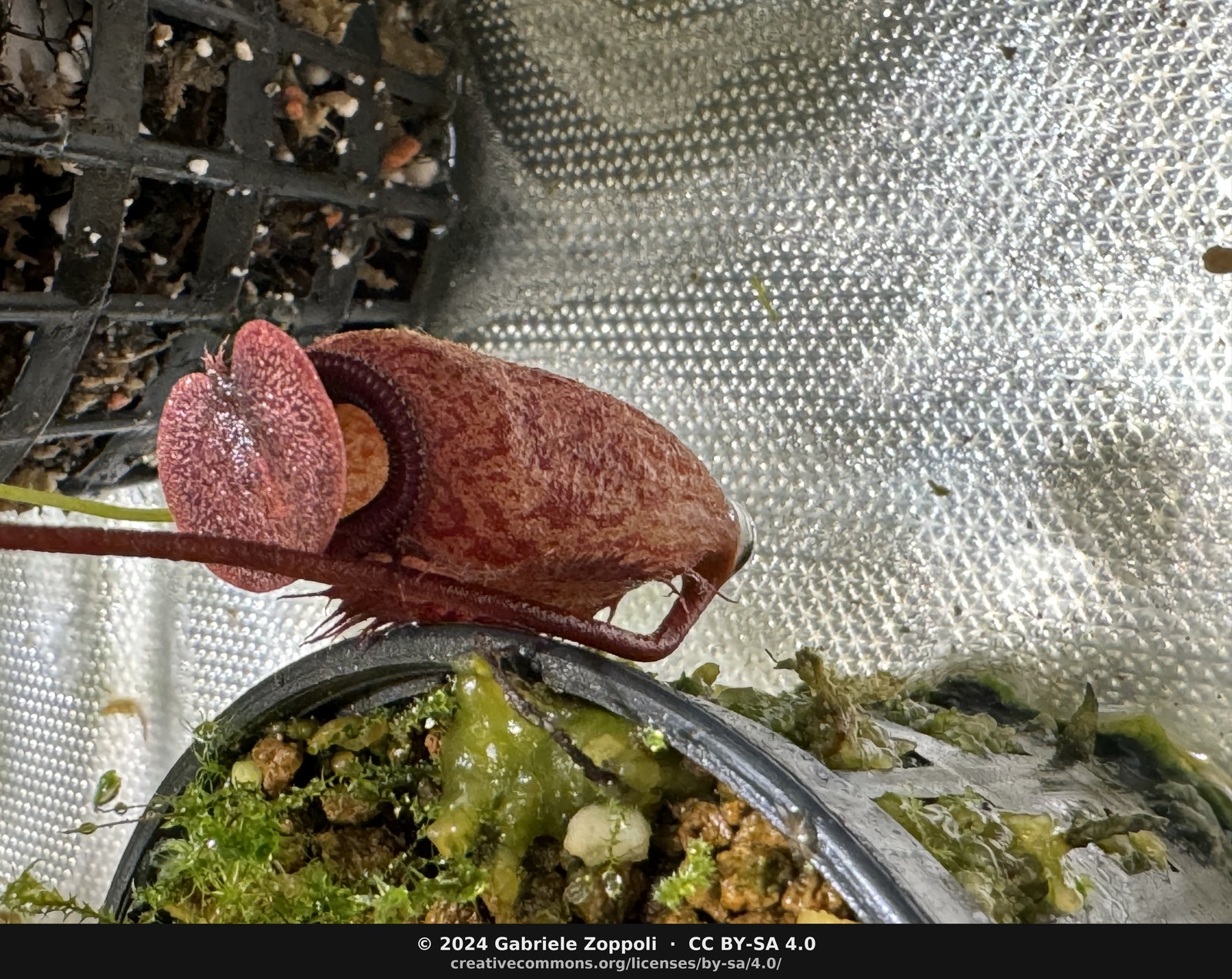
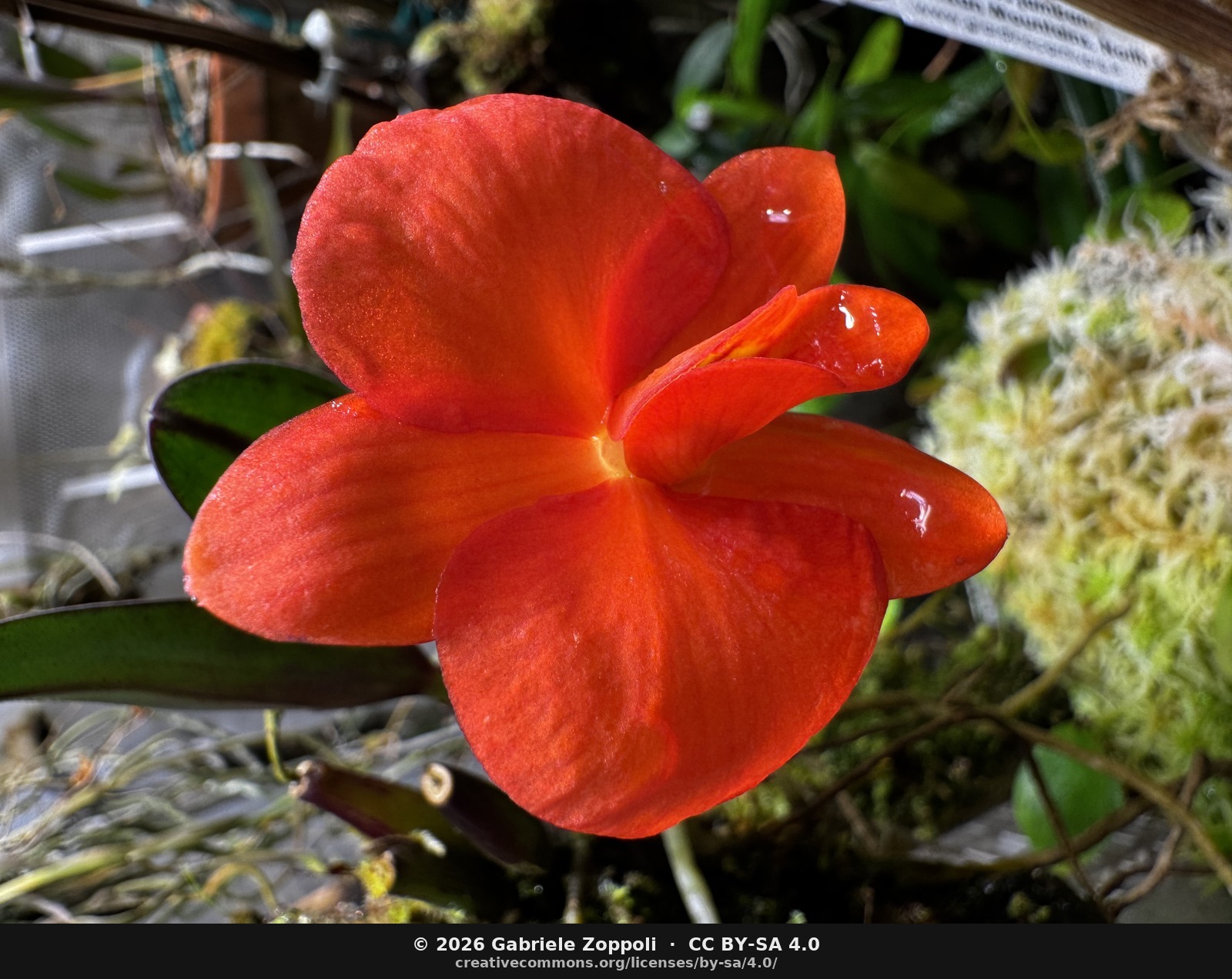
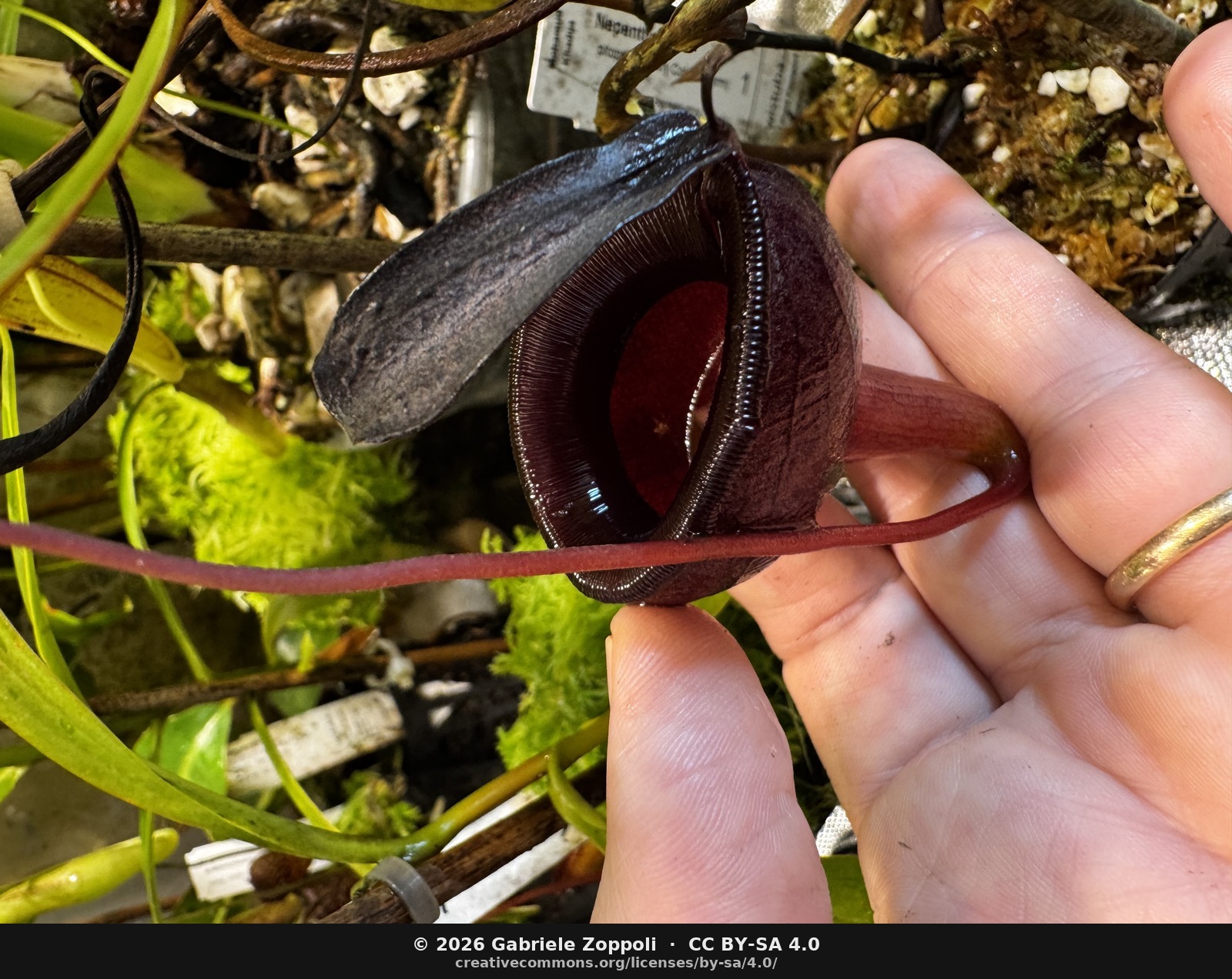
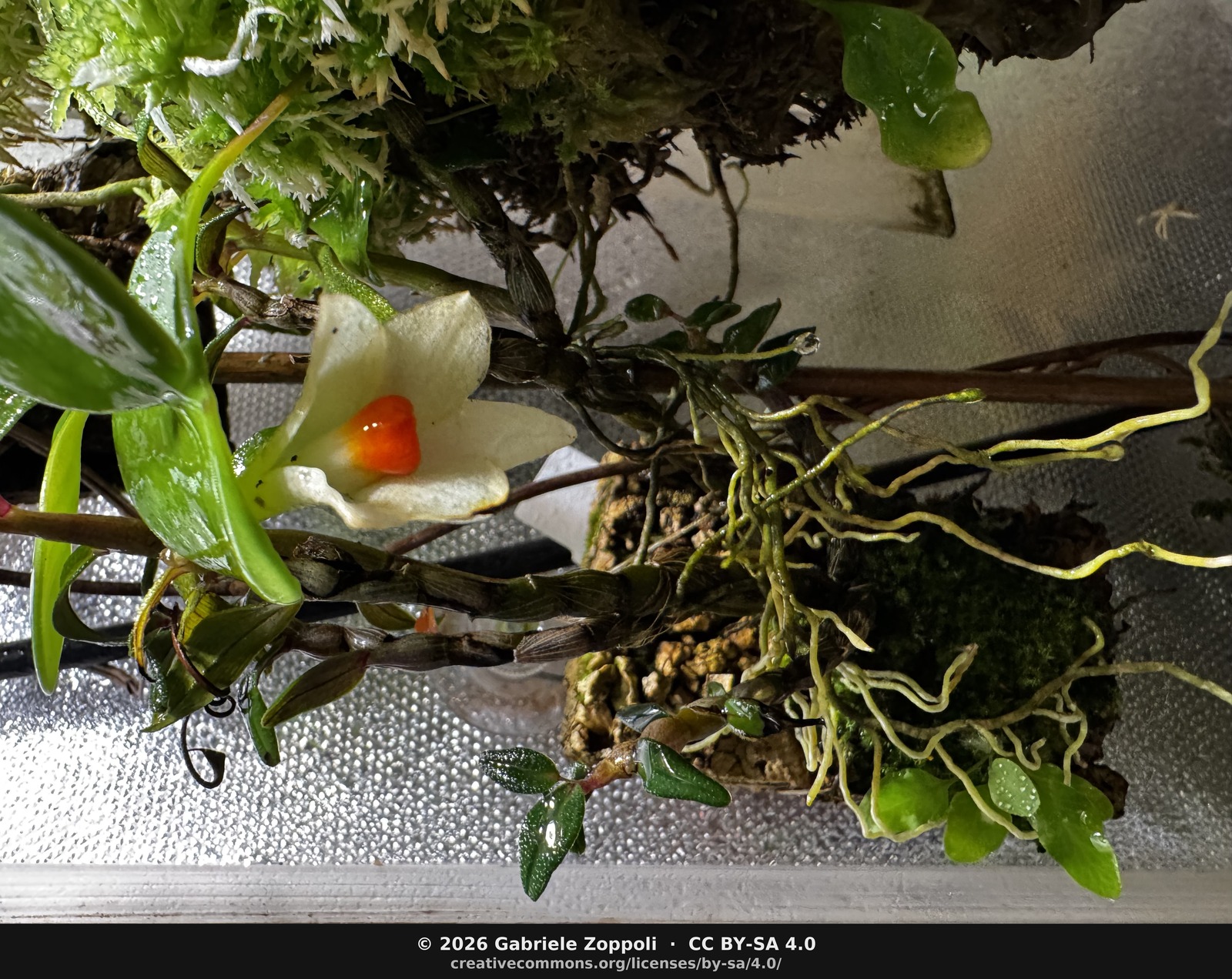
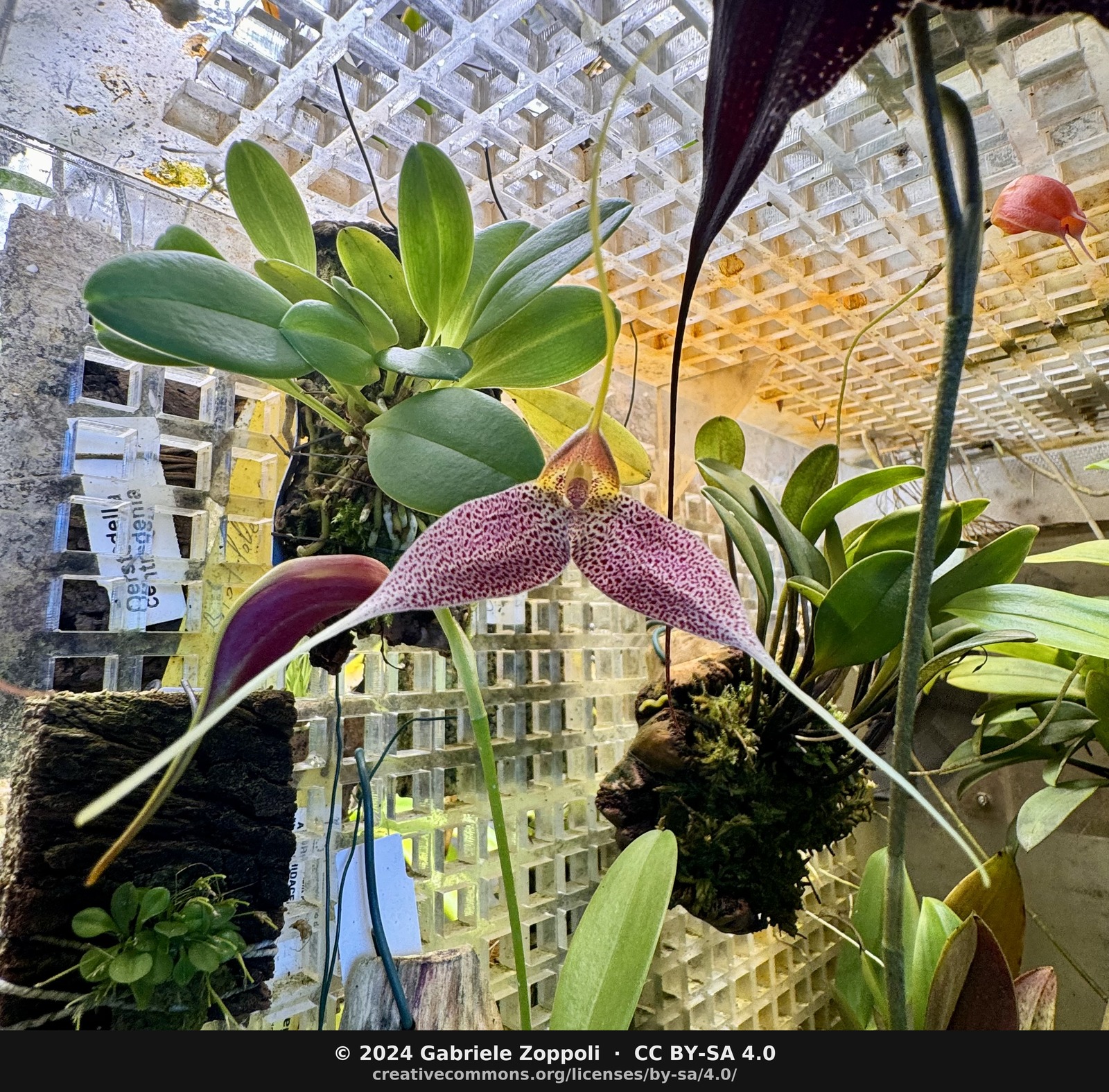
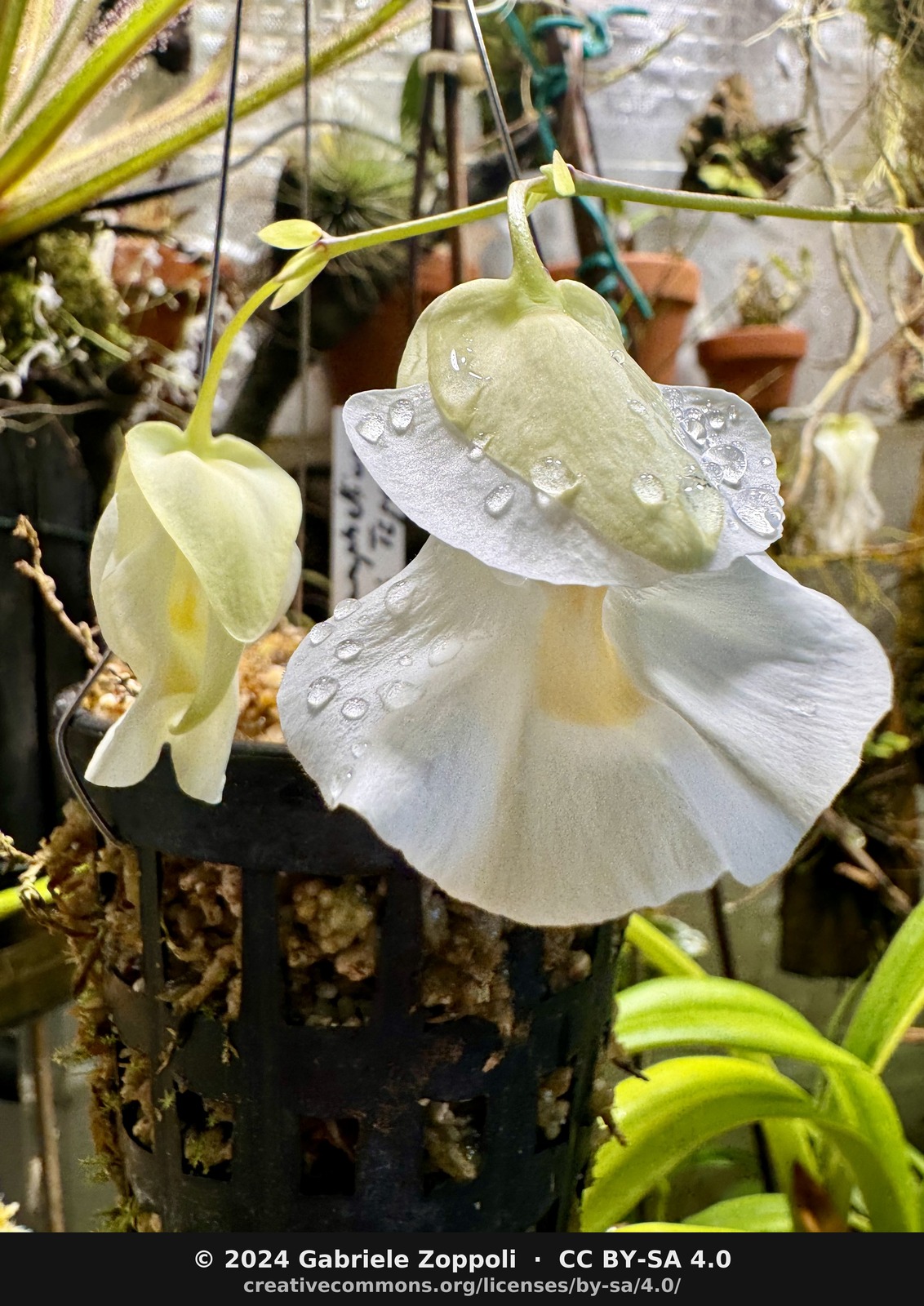
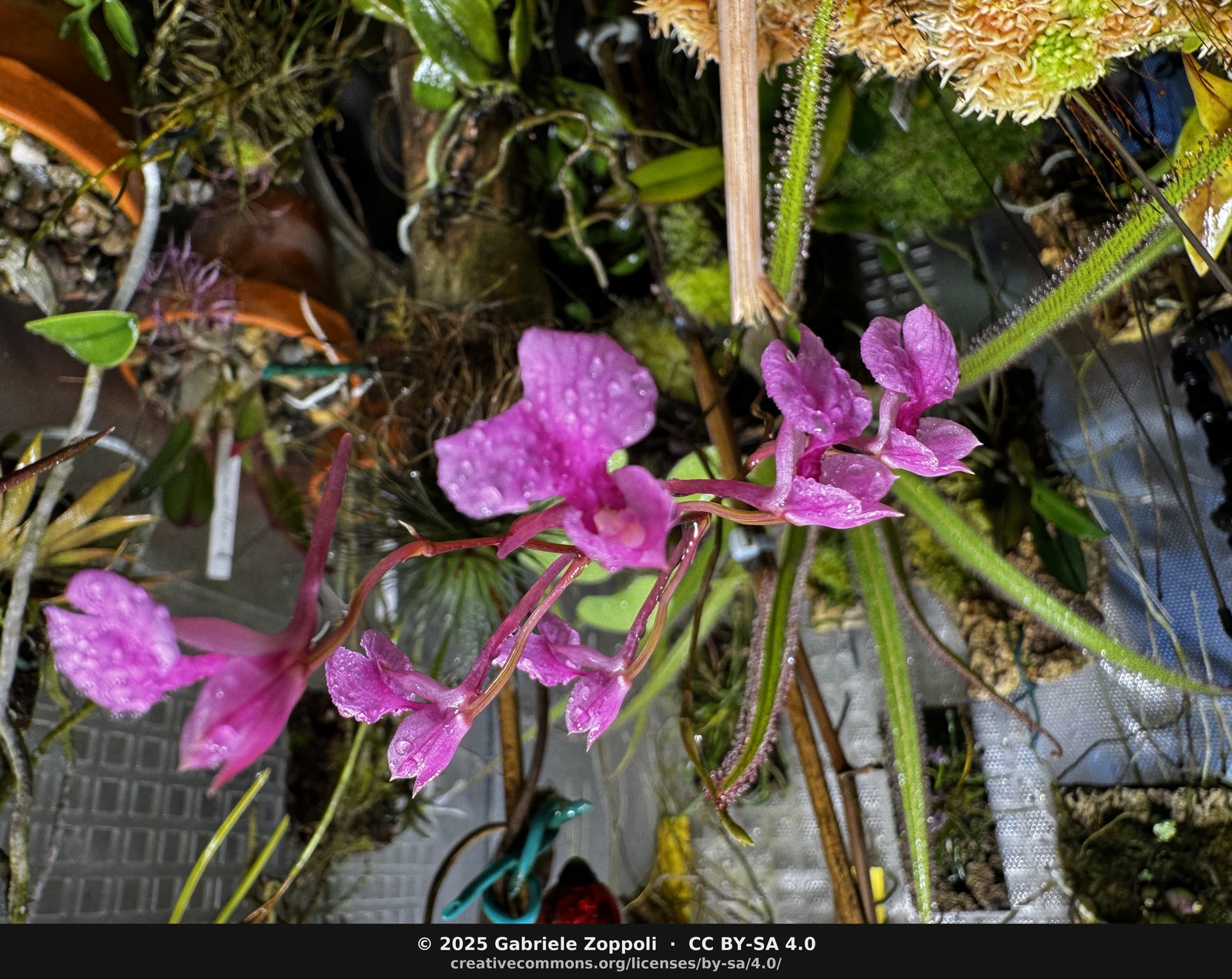
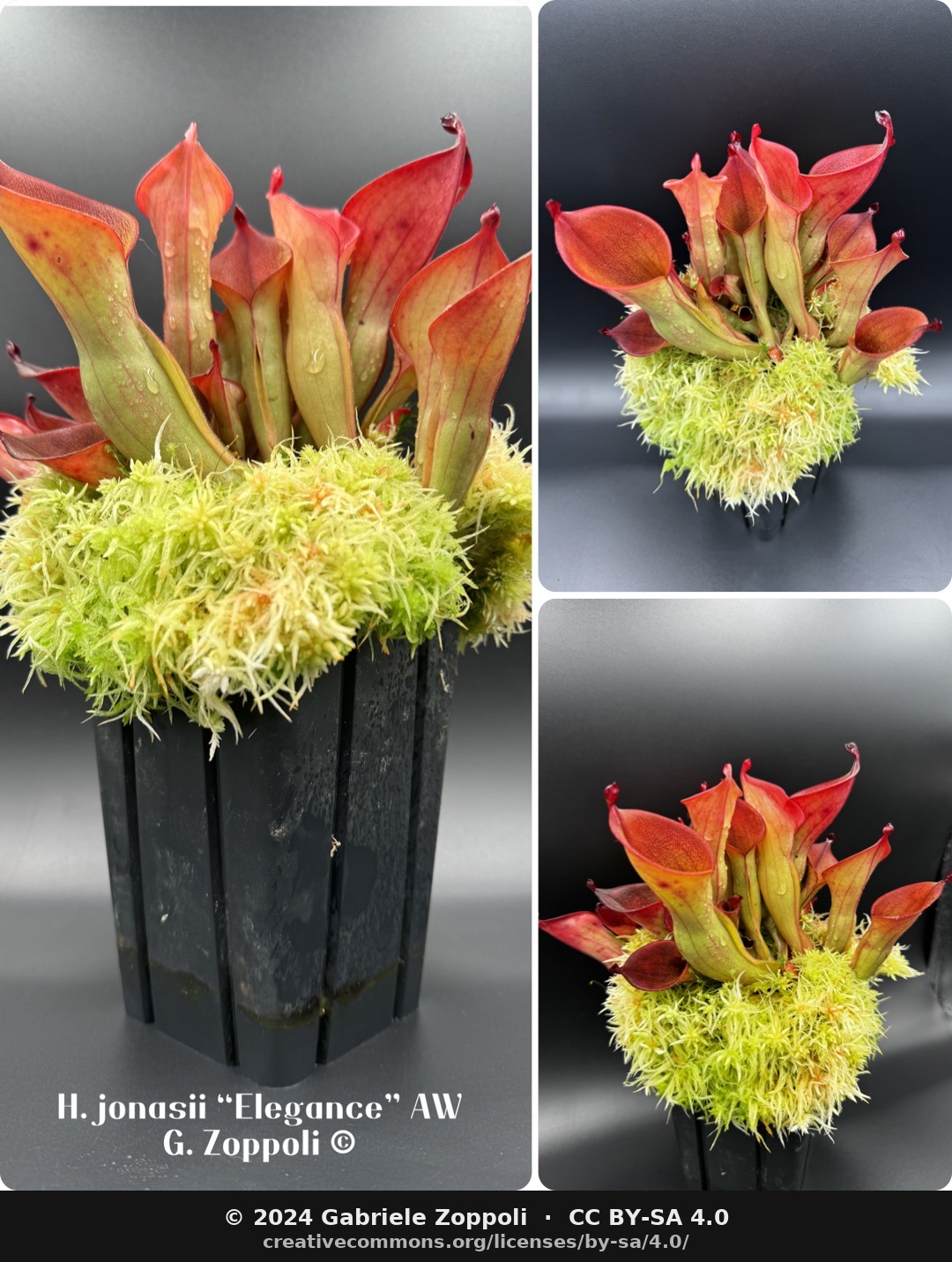
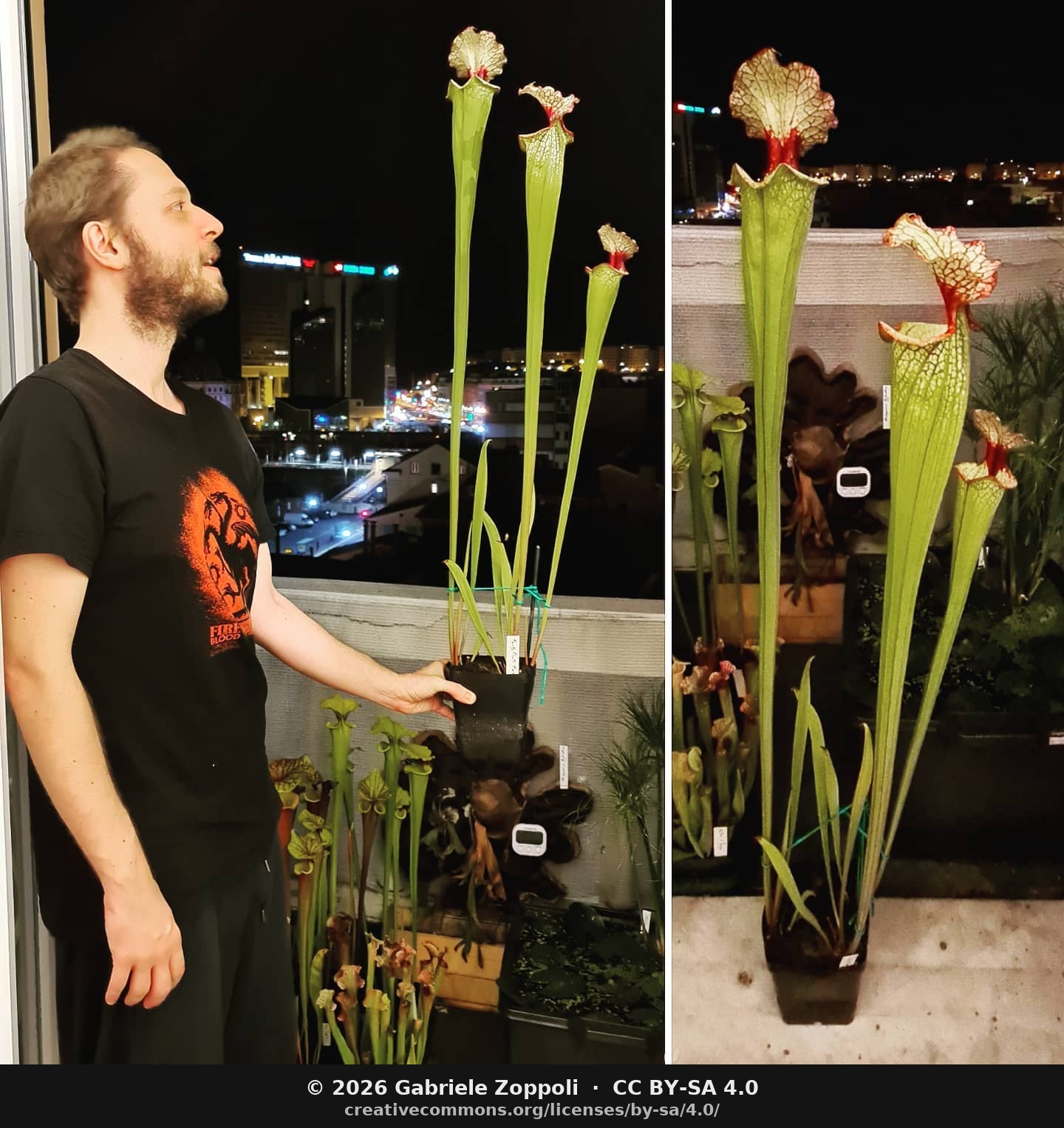
Species that prefer the open balcony.
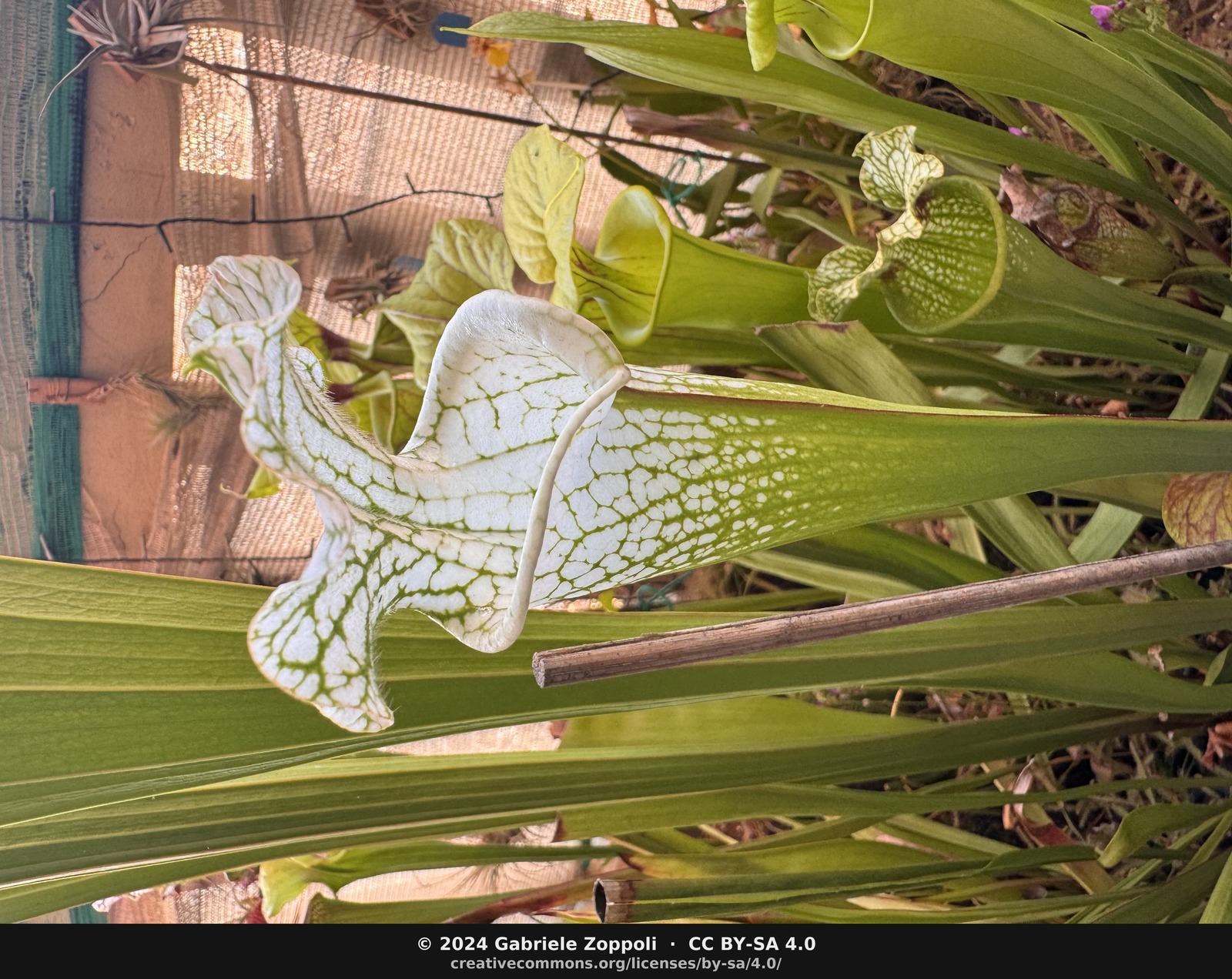
Every mist cycle and watt-hour, counted.
Measurements started in February 2026. The current marine-fridge cabinet has been running since late 2022, and replaced a chiller-cooled tank that ran from 2016.
- Mist cycles
- 1,998
- 446 per month
- Electricity
- 357 kWh
- 88 kWh per month
- Electricity bill
- €107
- €26 per month
- CO₂ quietly scrubbed
- 3.7 kg
- 0.8 kg per month
- Sensor readings
- 4.84 million
- 1.08 million per month
- Hours near-saturated
- 209
- 47 per month
Each cycle is triggered when the cabinet humidity drifts below the Colombian-curve target. Duration became regime-aware on 2026-05-05: 10 s by day, 20 s at night. Per-event RH gain ≈ +2 % overnight (sealed cabinet, freezer fighting back) or +3–4 % by day (fans exchanging air with the drier room). Water volume per cycle is still being calibrated.
Meross MSS310 on the whole power strip — compressor, 4× ChilLED grow lights, fans, Pi, sensors. Mean ~110 W continuous: 60–90 W overnight, ~220 W midday peak under the raised-cosine LED curve (peak slider 70 at solar noon, in place since 2026-05-04).
At Italian residential rates (~€0.30/kWh) — about a month of daily cappuccinos.
≈ a 50-km drive in a small car, offset by the plants. Modelled from 400 plants × ~0.36 g/day.
33 signals × 1 per minute, straight into InfluxDB.
Cumulative time at ≥ 95% RH — the threshold where epiphytic moss starts to drink.
Three projects from one grower in Genova. The highland cabinet simulates cloud-forest weather in real time, the inventions are smaller experiments that either spun off from it or answered a problem it couldn’t, and the collection is the accumulated census of everything alive (and many things no longer).
Quick links: GitHub · Highland Dashboard · Live UI · Dendrogram · Wishlists